
Introduction
Industrial facilities handle a large number of vehicles every day for raw material procurement, finished goods dispatch, contract transportation, and visitor vehicle management. Identifying every vehicle manually is time-consuming and often leads to delays, documentation errors, and security concerns. While RFID is an excellent solution for frequently visiting vehicles, many businesses also need a flexible identification method for temporary transporters, visitors, vendors, and third-party logistics providers.
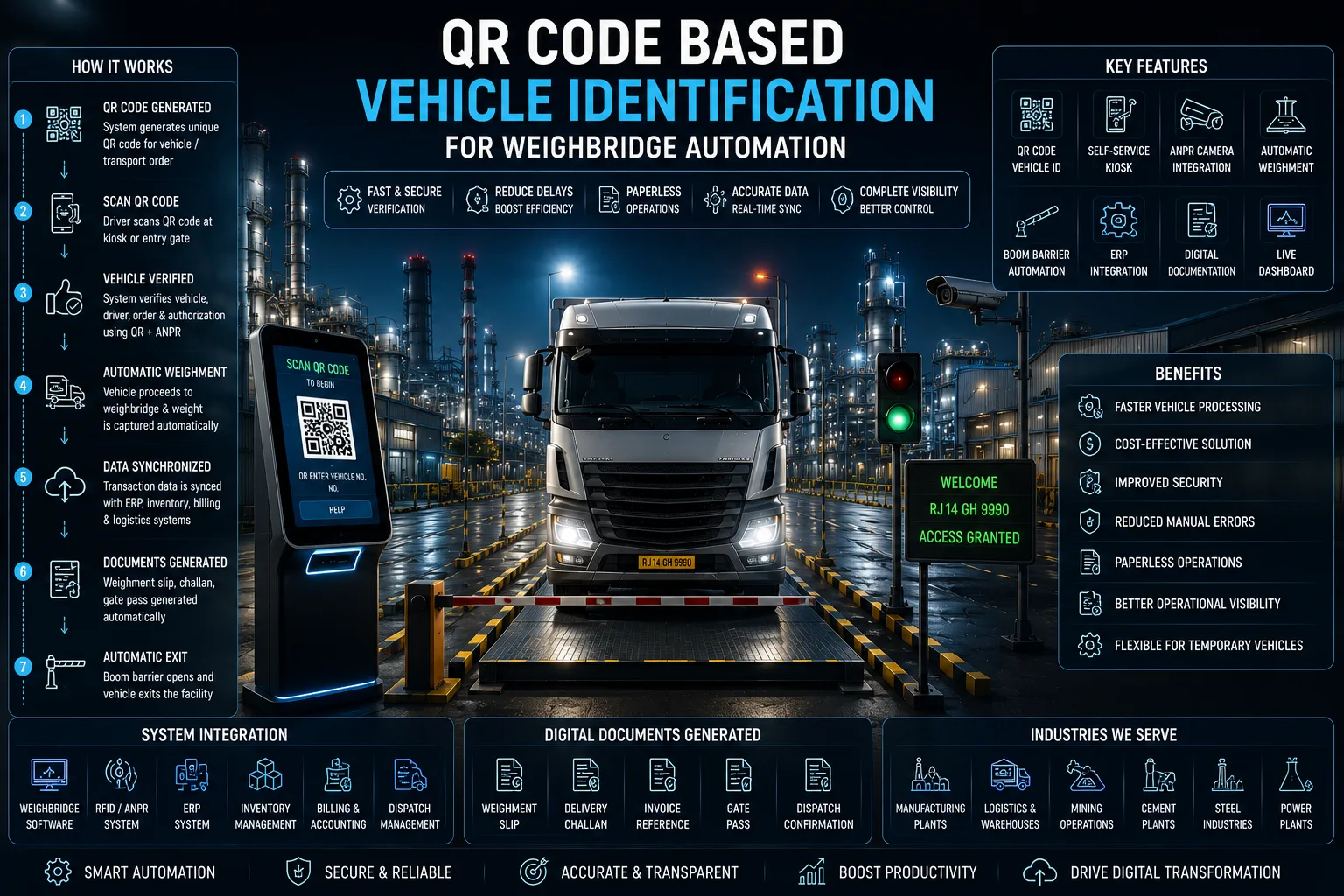
QR Code Weighbridge Automation offers a simple, secure, and cost-effective way to automate vehicle identification. Every vehicle is assigned a unique QR code that can be scanned at the entry gate or weighbridge kiosk. The system instantly verifies the vehicle, retrieves transport details, and initiates the automated weighment process without manual paperwork.
When integrated with weighbridge software, ANPR cameras, ERP systems, and boom barriers, QR code technology helps industries improve operational efficiency while maintaining complete control over vehicle movement.
What is QR Code Weighbridge Automation?
QR Code Weighbridge Automation is a vehicle identification system that uses digitally generated QR codes to authenticate vehicles during weighbridge operations.
Each QR code contains encrypted information such as vehicle details, transporter information, purchase orders, dispatch schedules, customer data, or delivery references. When scanned using a kiosk or QR scanner, the system automatically verifies the vehicle and retrieves all associated records.
A complete QR code-based weighbridge solution typically includes:
QR Code Generation System
QR Code Scanner
ANPR Camera Integration
Boom Barrier Automation
ERP Integration
Digital Documentation
Centralized Dashboard
This approach simplifies vehicle identification while reducing manual intervention.
Why Industries are Adopting QR Code Vehicle Identification
Businesses are increasingly using QR codes because they provide flexibility for vehicles that do not frequently visit the facility.
Common operational challenges solved by QR code automation include:
Manual Vehicle Verification
Security teams spend valuable time checking transport documents and vehicle information.
Temporary Transport Vehicles
Contract transporters and visitor vehicles often do not carry RFID tags.
Documentation Errors
Manual entry of vehicle information increases the risk of incorrect records.
Longer Vehicle Queues
Paper-based verification delays truck movement.
Limited Traceability
Tracking vehicle history manually becomes difficult during audits.
How QR Code Weighbridge Automation Works
Step 1: QR Code Generation
The system automatically generates a unique QR code for every transport order or vehicle transaction.
The QR code can be:
Printed
Sent via Email
Shared through SMS
Delivered using WhatsApp
Accessed through a Driver Mobile App
Step 2: Vehicle Arrival
The driver presents the QR code at the entry gate or self-service kiosk.
Step 3: QR Code Scanning
The scanner reads the QR code and verifies:
Vehicle Registration
Driver Information
Purchase Order
Dispatch Order
Customer Details
Material Information
Authorization Status
ANPR cameras can simultaneously verify the vehicle registration number for additional security.
Step 4: Automated Weighment
After successful verification, the boom barrier opens and the vehicle proceeds to the weighbridge.
Weight data is captured automatically.
Step 5: ERP Synchronization
Transaction information is updated in:
ERP
Inventory
Dispatch
Procurement
Billing
Logistics
Step 6: Digital Documentation
The system automatically generates:
Weighment Slip
Delivery Challan
Invoice Reference
Gate Pass
Dispatch Confirmation
Step 7: Vehicle Exit
The vehicle exits after completing the weighing process through an automated boom barrier.
Key Features of QR Code Weighbridge Automation
QR Code Vehicle Identification
Quickly identify vehicles using unique QR codes.
Contactless Verification
Drivers simply scan the QR code without submitting paperwork.
Self-Service Operation
Works seamlessly with weighbridge kiosks for unmanned operations.
Automatic Weight Capture
Captures accurate weight information directly from the weighbridge.
ANPR Verification
Provides dual authentication using automatic number plate recognition.
ERP Integration
Synchronizes vehicle transactions with procurement, logistics, inventory, and finance systems.
Digital Documentation
Generate all weighment documents automatically.
Live Dashboard
Monitor every QR code transaction through centralized dashboards.
Benefits of QR Code Weighbridge Automation
Faster Vehicle Processing
Reduce truck waiting time through automated verification.
Cost-Effective Implementation
QR codes are inexpensive compared to physical identification devices.
Better Security
Each QR code is unique and linked to authorized transport records.
Reduced Manual Errors
Automate vehicle identification and eliminate manual data entry mistakes.
Flexible Vehicle Management
Ideal for temporary transporters, visitors, contractors, and third-party logistics providers.
Paperless Operations
Digitize documentation and reduce administrative workload.
Improved Operational Visibility
Track every vehicle transaction in real time.
Better Customer Experience
Enable faster and smoother vehicle movement.
Industries That Benefit from QR Code Weighbridge Automation
Manufacturing Plants
Manage supplier and dispatch vehicles efficiently.
Logistics Companies
Improve fleet turnaround without requiring RFID tags for every truck.
Warehouses
Automate inbound and outbound logistics.
Cement Plants
Track raw material and finished goods transportation.
Mining Operations
Manage contractor and transporter vehicle identification.
Steel Industries
Automate truck verification for high-volume logistics.
Agriculture & Food Processing
Improve commodity transportation management.
Best Practices for Successful Implementation
To maximize efficiency:
Generate secure and encrypted QR codes.
Integrate QR scanners with weighbridge software.
Use ANPR cameras for dual verification.
Connect ERP and dispatch systems.
Automate boom barrier operations.
Enable digital document delivery.
Monitor transactions through centralized dashboards.
Future Trends in QR Code Weighbridge Automation
Mobile QR Codes
Drivers will receive dynamic QR codes through mobile applications.
Artificial Intelligence
AI will automatically identify suspicious vehicle activities and optimize vehicle scheduling.
Cloud-Based QR Management
Businesses will manage QR-based vehicle identification across multiple facilities through cloud platforms.
Digital Logistics Ecosystems
QR code identification will integrate with warehouse management, transport management, and production systems.
Hybrid Vehicle Identification
Organizations will combine RFID, QR codes, ANPR, and biometric verification to build highly secure industrial access control systems.
Why Businesses Should Invest in QR Code Weighbridge Automation
QR code technology offers a flexible and scalable identification method for organizations handling both regular and temporary transport vehicles. It complements RFID systems while reducing operational complexity and improving the speed of weighbridge operations.
Organizations implementing QR code weighbridge automation typically achieve:
Faster vehicle verification
Lower identification costs
Better security
Improved operational efficiency
Reduced paperwork
Better customer experience
Complete transaction traceability
Real-time reporting
Conclusion
QR Code Weighbridge Automation provides a modern, flexible, and cost-effective solution for automating vehicle identification in industrial weighbridge operations. By integrating QR code scanning with weighbridge software, ANPR cameras, ERP systems, and automated boom barriers, businesses can improve truck processing, reduce manual intervention, and strengthen operational security.
Whether managing manufacturing facilities, warehouses, logistics centers, mining operations, or cement plants, QR code technology enables faster vehicle movement while ensuring accurate documentation and complete operational visibility.
Frequently Asked Questions (FAQs)
What is QR Code Weighbridge Automation?
QR Code Weighbridge Automation is a vehicle identification solution that uses QR codes to verify trucks and automate weighbridge operations.
How does QR code vehicle identification work?
Each vehicle or transport order is assigned a unique QR code. The driver scans the QR code at the entry gate or kiosk, and the system automatically retrieves and verifies all transaction details.
Can QR code identification replace RFID?
QR codes are ideal for temporary vehicles and visitors, while RFID is better suited for vehicles that frequently visit the facility. Many organizations use both technologies together.
Which industries benefit from QR code weighbridge automation?
Manufacturing, logistics, warehousing, mining, cement, steel, food processing, and agriculture industries commonly implement QR-based vehicle identification.
What are the benefits of QR code weighbridge automation?
The system offers faster vehicle processing, lower implementation costs, better security, reduced paperwork, improved traceability, and seamless ERP integration.