Integrating Weighbridge Software with SAP and ERP Systems
Introduction
Modern industries rely on accurate and real-time information to manage production, inventory, logistics, and dispatch operations efficiently. However, many organizations still use standalone weighbridge systems that require manual data entry and duplicate record management. These disconnected processes increase the risk of errors, delays, and operational inefficiencies.
Weighbridge ERP Integration provides a seamless connection between weighbridge software and enterprise resource planning systems such as SAP, Oracle, Microsoft Dynamics, and other ERP platforms. By automatically exchanging data between weighing operations and business systems, organizations can eliminate manual intervention, improve accuracy, and enhance overall productivity.
As industries embrace digital transformation and Industry 4.0, ERP-integrated weighbridge solutions are becoming an essential part of intelligent manufacturing and logistics operations.
What is Weighbridge ERP Integration?
Weighbridge ERP Integration refers to the process of connecting weighbridge automation software with ERP platforms such as SAP to enable automatic data sharing and transaction processing.
The integration ensures that:
Vehicle details are synchronized automatically.
Weight transactions are transferred in real time.
Inventory records are updated instantly.
Dispatch and billing operations are streamlined.
Reports are generated without manual intervention.
This creates a unified ecosystem that improves visibility and operational efficiency.
Why Traditional Standalone Weighbridge Systems Create Problems
Duplicate Data Entry
Operators often enter the same information multiple times into different systems.
Human Errors
Manual entries increase the chances of mistakes and inaccurate records.
Delayed Reporting
Data reconciliation between weighbridge and ERP systems consumes valuable time.
Lack of Real-Time Visibility
Management does not receive instant operational insights.
Poor Inventory Synchronization
Inventory records may not accurately reflect actual material movement.
These challenges can impact productivity and profitability.
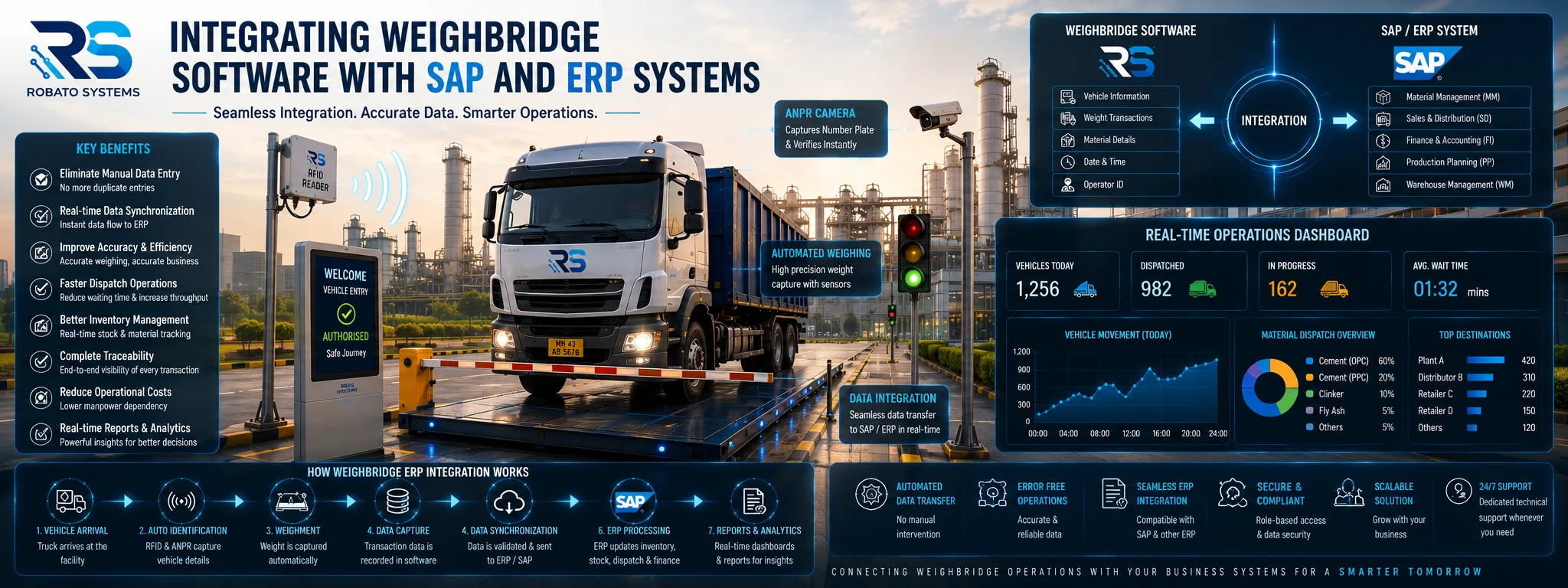
How Weighbridge ERP Integration Works
Step 1: Vehicle Registration
Vehicle and dispatch information is stored in the ERP system.
Step 2: Automatic Vehicle Identification
RFID readers or ANPR cameras identify incoming vehicles.
Step 3: Weight Measurement
The weighbridge records gross and tare weight automatically.
Step 4: Data Synchronization
Weight data is transferred instantly to the ERP system.
Step 5: Inventory Update
Material quantities are updated automatically.
Step 6: Invoice and Dispatch Processing
Invoices and dispatch documents are generated seamlessly.
Step 7: Reporting and Analytics
Managers receive real-time reports and dashboards.
Components of an ERP-Integrated Weighbridge System
Weighbridge Automation Software
Captures and processes weight transactions.
ERP System
Manages inventory, finance, procurement, and production.
RFID Readers
Identify vehicles automatically.
ANPR Cameras
Provide additional vehicle verification.
Database Server
Stores transaction records securely.
API and Middleware Integration
Facilitate communication between systems.
Central Dashboard
Provides operational visibility and analytics.
Benefits of Weighbridge ERP Integration
Elimination of Manual Data Entry
Automatic synchronization reduces errors and saves time.
Improved Accuracy
Real-time data transfer ensures consistency across systems.
Faster Dispatch Operations
Automated workflows reduce processing time.
Better Inventory Management
Inventory records are updated instantly.
Enhanced Traceability
Complete transaction histories improve accountability.
Real-Time Reporting
Managers gain access to live operational information.
Reduced Operational Costs
Automation lowers manpower requirements and minimizes rework.
Increased Productivity
Streamlined processes improve overall plant efficiency.
SAP Weighbridge Integration for Manufacturing Industries
SAP integration enables organizations to synchronize weighbridge transactions with:
Material Management (MM)
Track raw materials and finished goods accurately.
Sales and Distribution (SD)
Manage dispatch and invoicing processes.
Production Planning (PP)
Ensure material availability for manufacturing.
Finance and Accounting (FI)
Automate billing and financial records.
Warehouse Management (WM)
Maintain inventory accuracy and traceability.
This integration eliminates duplicate work and improves operational transparency.
Industries Benefiting from Weighbridge ERP Integration
Cement Plants
Streamline dispatch operations and inventory management.
Steel Industries
Improve raw material tracking and production planning.
Mining Operations
Reduce material losses and enhance reporting.
Logistics Companies
Optimize fleet and dispatch management.
Power Plants
Monitor fuel movement and stock levels.
Chemical Industries
Ensure accurate material handling and compliance.
Manufacturing Plants
Synchronize production and inventory data efficiently.
Key Features of ERP-Integrated Weighbridge Software
Real-Time Data Synchronization
Transfer weight transactions automatically.
RFID and ANPR Integration
Improve vehicle identification and security.
Automated Report Generation
Generate reports without manual effort.
Cloud-Based Access
Monitor operations remotely.
Multi-Site Management
Control multiple facilities from one platform.
Advanced Analytics
Gain valuable operational insights.
User Access Control
Enhance security and compliance.
Common ERP Platforms Supported
Modern weighbridge software can integrate with:
SAP ERP
SAP S/4HANA
Oracle ERP
Microsoft Dynamics 365
Tally ERP
Infor ERP
Epicor ERP
Custom ERP Solutions
This flexibility allows industries to build scalable and future-ready operations.
Future Trends in Weighbridge ERP Integration
AI-Based Analytics
Artificial intelligence helps optimize operations and identify inefficiencies.
IoT Connectivity
Connected devices provide real-time equipment status.
Cloud ERP Systems
Enable centralized and remote access.
Mobile Applications
Managers can monitor operations from anywhere.
Paperless Operations
Digital records improve sustainability and efficiency.
Industry 4.0 Integration
Supports smart manufacturing initiatives.
How to Choose the Right Weighbridge ERP Integration Solution
Before implementing a solution, consider:
ERP compatibility
API support
RFID and ANPR integration capabilities
Real-time synchronization features
Cloud accessibility
Scalability for future growth
Security mechanisms
Technical support and maintenance
Selecting the right integration platform ensures maximum return on investment.
Conclusion
Weighbridge ERP Integration is transforming industrial operations by connecting weighbridge software with SAP and other ERP systems. By automating data exchange and eliminating manual processes, organizations can improve accuracy, accelerate dispatch operations, and gain complete visibility over material movement.
As industries continue embracing digital transformation, ERP-integrated weighbridge solutions are becoming essential for achieving smarter, faster, and more efficient operations.
Frequently Asked Questions (FAQs)
What is Weighbridge ERP Integration?
Weighbridge ERP Integration connects weighbridge software with ERP systems to automate data exchange and streamline operations.
Can weighbridge software integrate with SAP?
Yes. Modern weighbridge systems support SAP ERP and SAP S/4HANA integration.
What are the benefits of ERP-integrated weighbridge systems?
Benefits include improved accuracy, real-time reporting, inventory synchronization, reduced manual work, and faster dispatch operations.
Which industries use weighbridge ERP integration?
Cement, steel, mining, logistics, power plants, chemical industries, and manufacturing plants widely use ERP-integrated weighbridge solutions.
Which ERP systems are commonly supported?
SAP, Oracle, Microsoft Dynamics, Tally ERP, Infor ERP, Epicor ERP, and custom ERP platforms are commonly supported.