Weighbridge Automation System: The Complete Guide for Modern Industrial Operations
Every industry that moves heavy goods has a moment that defines its operational efficiency: the weighbridge transaction. When a truck arrives at a facility carrying raw materials, processed goods, or bulk cargo, the speed and accuracy of that weighment determines the pace of everything that follows. A manual process handled by a human operator introduces delays, errors, and opportunities for fraud at every single transaction. A weighbridge automation system eliminates all of that. It replaces the operator with intelligent hardware and software that completes every weighment automatically, accurately, and with a complete audit trail. This guide explains everything you need to know about it.
What a Weighbridge Automation System Actually Does
A weighbridge automation system integrates multiple technologies into a single coordinated process that manages vehicle identification, weighment, data recording, and gate control without any human intervention. The system handles everything from the moment a truck approaches the facility to the moment it exits, processing each transaction in a fraction of the time a manual system requires.
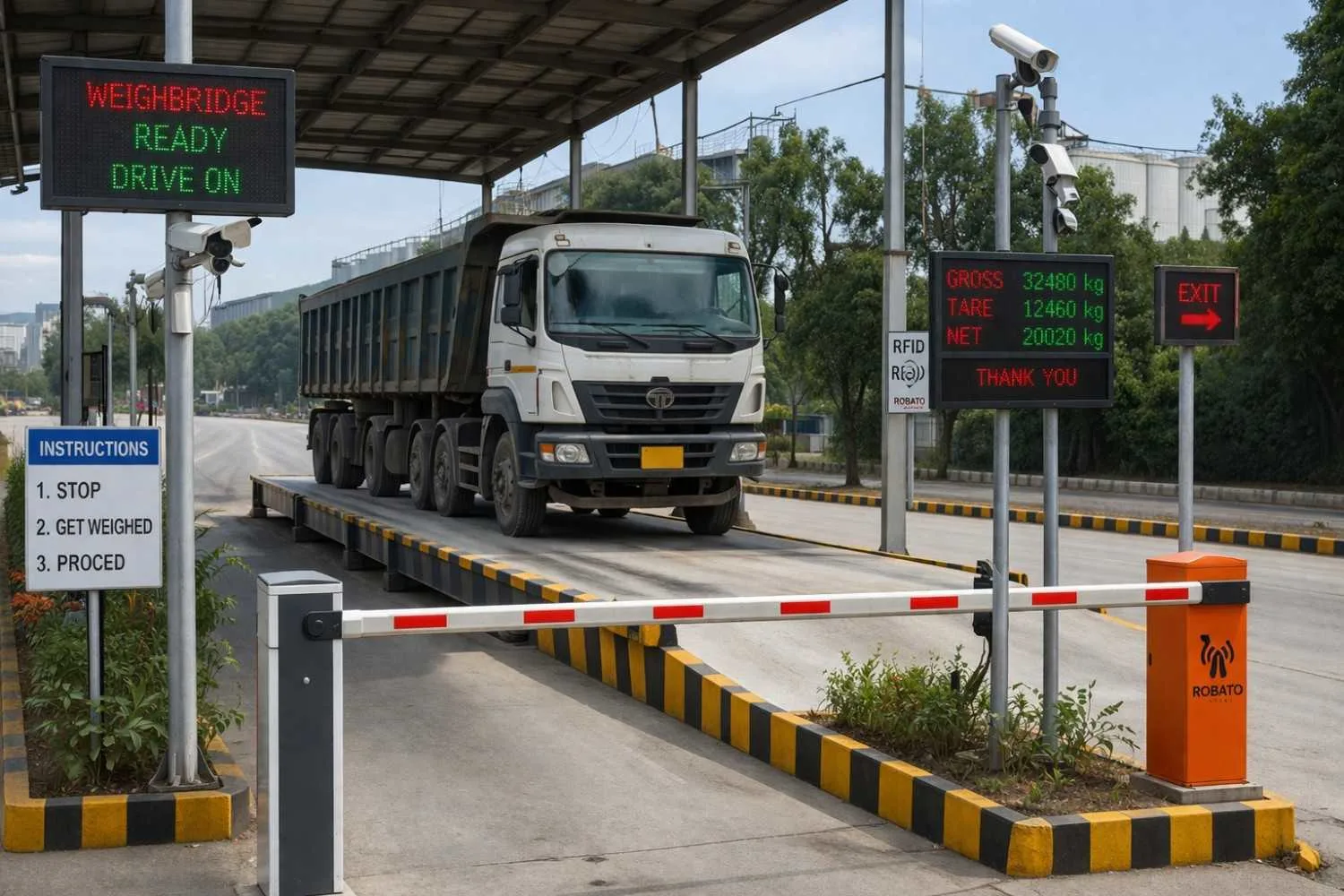
Robato Systems' WeighEYE platform is designed around this principle of complete automation. RFID readers or ANPR cameras identify every vehicle as it approaches. The boom barrier opens only after the vehicle has been positively identified as authorized. Position sensors verify that the truck is correctly aligned on the weighbridge platform before the weight reading is taken, eliminating mispositioned weighments that would otherwise produce inaccurate data. The gross weight and tare weight are recorded automatically, the net weight is calculated instantly, and the complete transaction record is stored in real time. The barriers then open and the truck proceeds without any manual processing step at any point in the sequence.
Why Manual Weighbridge Operations Create Problems That Compound Over Time
Facilities that still operate manual weighbridges often underestimate the full scope of the problems this creates. The most visible issue is speed. A human operator who needs to check documents, verify vehicle details, record weight readings, and process paperwork at every transaction creates a bottleneck that slows vehicle throughput and causes queues at peak times.
The less visible but more costly problem is data integrity. Manual processes introduce transcription errors, incorrect vehicle registrations, and fraudulent weight recordings that can result in significant financial losses over time. Several real-world cases have shown that truck drivers and operators working together have delivered less material than invoiced simply because no automated verification system was in place to catch the discrepancy. A weighbridge automation system removes human intervention from the data capture process entirely, making fraudulent manipulation of weighment records technically impossible.
The Hardware Components That Make It Work
A complete weighbridge automation system from Robato Systems brings together several integrated hardware components that each perform a specific function within the overall automated process.
RFID readers and tags identify registered vehicles automatically as they approach, linking each transaction to a specific vehicle and purchase order in the database before the weighment begins. ANPR cameras capture photographs of the vehicle from multiple angles and record the license plate, creating a visual record that accompanies every transaction entry in the system. Position sensors detect whether the vehicle is correctly aligned on the platform, preventing the incorrect weight readings that mispositioned trucks would otherwise produce.
Boom barriers control physical access to and from the weighbridge platform, opening and closing automatically based on signals from the access control layer of the system. LED indicator displays guide drivers through the process step by step without requiring any operator intervention. CCTV cameras positioned at key points in the weighbridge area provide an uninterrupted visual record of every transaction for security and audit purposes.
Real-Time Visibility and ERP Integration
One of the most operationally significant advantages of a weighbridge automation system is the speed at which transaction data becomes available to the rest of the business. Because every weighment is recorded automatically in real time, the data is immediately accessible through the central management software, the cloud server, and any connected ERP platform.
A finance team can access completed transaction records and generate invoices without waiting for a site operator to submit paperwork. A plant manager can view live weighment activity from any location through a cloud-based dashboard. An auditor can retrieve a complete record of every transaction, including vehicle photographs and timestamps, for any period at any facility from a single interface. This level of visibility closes the information gap between the physical weighbridge and the business systems that depend on its data.
Industries That Rely on It Every Day
Weighbridge automation systems deliver measurable operational value across manufacturing plants tracking raw material intake, logistics companies managing fleet weighments across multiple depots, mining operations calculating load tonnage for royalty and compliance purposes, construction sites verifying material deliveries against purchase orders, and waste management facilities recording disposal volumes for regulatory reporting.
In each case, the system processes more vehicles per hour, produces more accurate data, costs less to run than a manned weighbridge, and provides an unbroken audit trail that protects the business from both internal and external disputes.