Bulk material handling industries manage large quantities of materials such as coal, minerals, aggregates, cement, sand, fly ash, fertilizers, grains, chemicals, and other industrial products. With hundreds of trucks entering and leaving facilities every day, efficient vehicle weighing and dispatch management are essential for maintaining smooth operations.
Traditional weighbridge processes often depend on manual vehicle verification, paper-based records, and operator-driven data entry. These processes can increase truck waiting time, create weighing errors, and make it difficult to track material movement accurately.
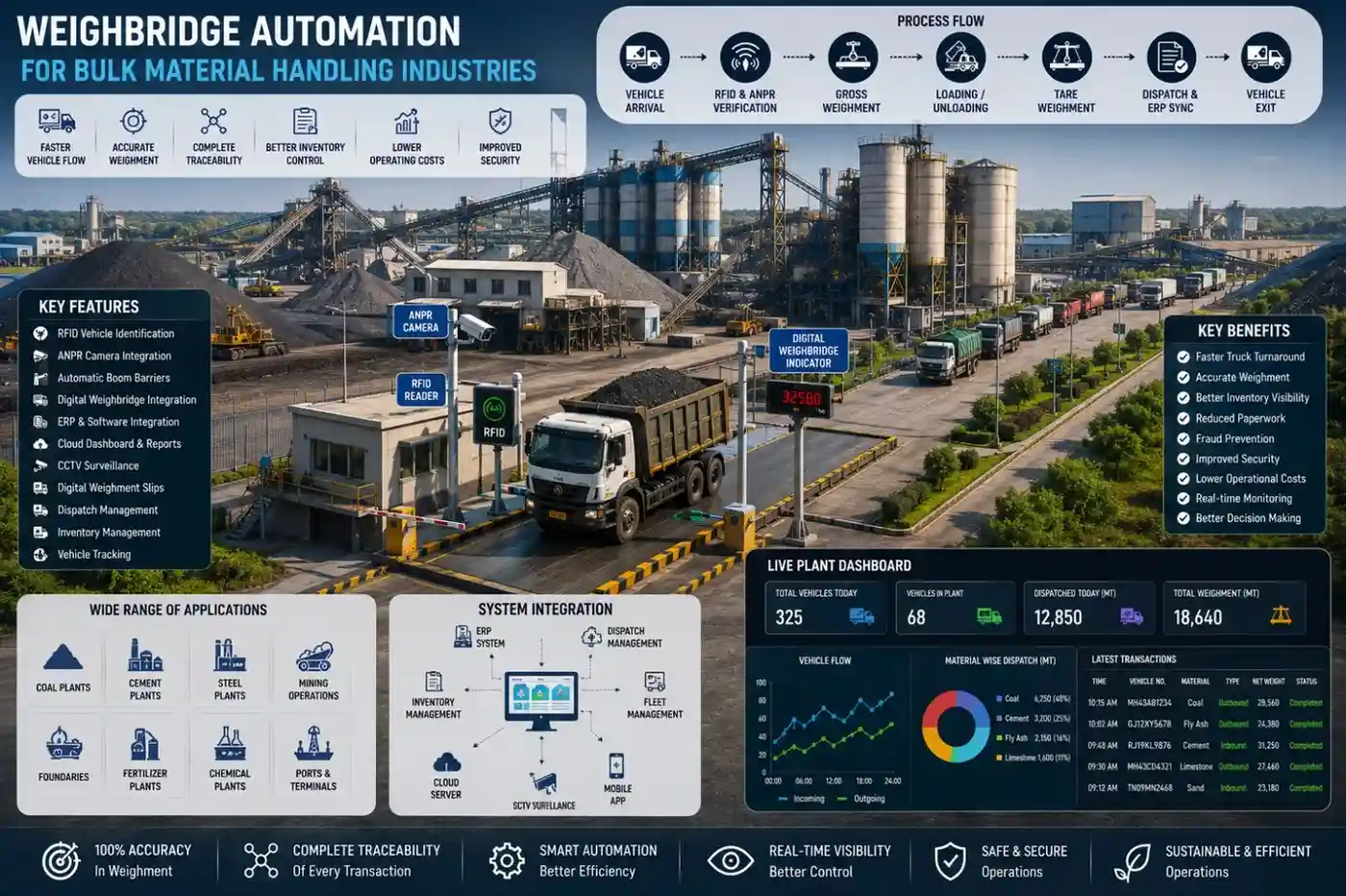
Weighbridge Automation for Bulk Material Handling provides a digital approach to vehicle weighing, identification, dispatch, and material tracking. By integrating RFID, ANPR, automatic boom barriers, ERP systems, and centralized dashboards, businesses can create a faster, more accurate, and transparent logistics process.
What is Weighbridge Automation for Bulk Material Handling?
Weighbridge automation is a technology-driven system that automates the complete vehicle weighing and material dispatch workflow.
Depending on the plant's requirements, the system can integrate:
Digital Weighbridge Indicators
Automatic Boom Barriers
ERP Integration
Dispatch Management Software
CCTV Surveillance
Cloud Monitoring
Digital Weighment Slips
Vehicle Tracking
Instead of relying on operators to manually record every transaction, the system automatically captures and processes vehicle and weighment information.
Why Bulk Material Industries Need Weighbridge Automation
Bulk material facilities often deal with high vehicle volumes and large quantities of valuable materials. Manual processes can create several operational challenges, including:
Long truck queues
Slow vehicle processing
Manual weighing errors
Incorrect dispatch records
Material inventory mismatches
Unauthorized vehicle movement
Excessive paperwork
Limited vehicle visibility
Delayed dispatch approvals
Higher logistics costs
Automation helps standardize these operations and provides better control over every vehicle and material transaction.
How Bulk Material Weighbridge Automation Works
Step 1: Vehicle Registration
Transport vehicles are registered in the system and can be associated with:
Vehicle Number
RFID Tag
Driver Details
Transporter
Material Type
Customer
Dispatch Order
Destination
Step 2: Automatic Vehicle Identification
When a registered truck approaches the facility, the RFID reader identifies the vehicle. An ANPR camera can simultaneously verify the vehicle number.
The system checks the vehicle against the relevant dispatch order before allowing entry.
Step 3: Automated Weighment
The vehicle moves onto the weighbridge and the weight is automatically captured by the system.
The transaction can include:
Vehicle Number
Gross Weight
Material
Date and Time
Transaction ID
RFID Information
Step 4: Loading or Unloading
The vehicle moves to the designated loading or unloading area. Its movement can be tracked through the integrated system.
Step 5: Final Weighment
The vehicle is weighed again when required.
The system automatically calculates:
Net Weight = Gross Weight − Tare Weight
This eliminates the need for manual calculations.
Step 6: Dispatch Completion
Once the transaction is approved, the system can generate a digital weighment slip, gate pass, invoice, or other required dispatch documents.
Key Features of Bulk Material Weighbridge Automation
RFID Vehicle Identification
RFID automatically identifies registered trucks and reduces manual verification at the gate.
Automated Weighment
Weight information is captured directly from the weighbridge and stored digitally.
ANPR Integration
Automatic Number Plate Recognition provides an additional layer of vehicle verification.
Automatic Boom Barriers
Vehicle entry and exit can be controlled automatically based on authorization.
ERP Integration
Weighment information can be synchronized with ERP systems for inventory, billing, procurement, and dispatch operations.
Digital Documentation
Digital weighment slips and gate passes reduce paperwork and improve transaction traceability.
Centralized Dashboard
Operations teams can monitor:
Vehicle Entries
Vehicle Exits
Weighment Transactions
Material Dispatch
Truck Queues
Daily Weight Reports
Pending Transactions
Benefits of Weighbridge Automation
Faster Truck Turnaround
Automated identification and weighing reduce unnecessary waiting at entry and exit points.
Improved Weighing Accuracy
Direct integration between the weighbridge and software reduces manual data-entry errors.
Better Material Tracking
Every transaction can be associated with a specific vehicle, material, customer, and dispatch order.
Reduced Paperwork
Digital records eliminate many manual forms and handwritten weighment slips.
Improved Security
RFID, ANPR, CCTV, and boom barriers help control unauthorized vehicle movement.
Better Inventory Visibility
Integration with ERP and inventory systems helps maintain accurate material records.
Reduced Operational Costs
Faster vehicle processing and less manual work can improve overall logistics efficiency.
Applications
Weighbridge automation can be used across a wide range of bulk material handling industries, including:
Coal Handling Plants
Mining Operations
Cement Plants
Steel Plants
Foundries
Fertilizer Plants
Chemical Industries
Aggregate Plants
Ready Mix Concrete Plants
Fly Ash Dispatch Facilities
Ports and Container Yards
Warehouses
Scrap Yards
Bulk Logistics Facilities
Integration with Industry 4.0
Modern bulk material handling operations are increasingly connected through Industry 4.0 technologies.
A smart weighbridge system can integrate with:
Industrial IoT
RFID
ERP Software
GPS Tracking
Fleet Management
Cloud Dashboards
CCTV Systems
ANPR
Mobile Applications
Dispatch Management Platforms
These integrations create a connected logistics environment where vehicle and material data can be monitored from a centralized platform.
Best Practices for Implementing Weighbridge Automation
Before implementing an automated weighbridge system, businesses should:
Identify the complete vehicle movement process.
Register and categorize transport vehicles.
Integrate the weighbridge with existing ERP software.
Install RFID readers at appropriate entry points.
Use ANPR for additional vehicle verification.
Calibrate weighing equipment regularly.
Provide reliable network connectivity.
Monitor truck turnaround time.
Maintain automation equipment regularly.
Train plant operators on the automated workflow.
Common Challenges
High Vehicle Volumes
Facilities handling hundreds of trucks daily need efficient queue and traffic management.
Harsh Industrial Conditions
Dust, vibration, moisture, and temperature variations can affect field equipment, making industrial-grade hardware important.
Existing Weighbridge Equipment
Older weighbridges may require suitable interfaces or upgrades before software automation can be implemented.
ERP Integration
Different organizations use different ERP and inventory systems, so integration needs to be planned according to the existing architecture.
Future of Bulk Material Weighbridge Automation
The future of weighbridge automation is moving toward increasingly intelligent logistics management.
Emerging technologies include:
AI-based vehicle verification
Automated truck scheduling
IoT-enabled weighbridge monitoring
Predictive maintenance
GPS-based fleet visibility
Cloud-based multi-site monitoring
Mobile dispatch approvals
Advanced logistics analytics
These technologies can help bulk material handling companies move from basic weighing automation toward complete digital logistics management.
Why Choose Robato Systems?
Robato Systems provides Weighbridge Automation for Bulk Material Handling Industries by combining vehicle identification, automated weighing, RFID, ANPR, boom barriers, ERP integration, digital documentation, and centralized monitoring.
The solution is designed to help businesses reduce manual intervention, improve truck turnaround time, increase weighing accuracy, strengthen vehicle security, and maintain better visibility over bulk material movement.
Whether the facility handles coal, minerals, aggregates, cement, chemicals, fertilizers, scrap, or other bulk materials, the system can be configured around the plant's existing workflow and operational requirements.
Conclusion
Bulk material handling operations depend on efficient vehicle movement, accurate weighing, and reliable material tracking. Manual weighbridge processes can make these activities slower and more difficult to control as vehicle volumes increase.
Weighbridge Automation for Bulk Material Handling provides a centralized and automated approach to vehicle identification, weighing, dispatch, documentation, and material tracking. With RFID, ANPR, ERP integration, automated barriers, and digital dashboards, businesses can improve operational efficiency while maintaining greater control over their logistics processes.
For industries handling high volumes of bulk materials, automating the weighbridge is an important step toward building a faster, more transparent, and digitally connected logistics operation.
Frequently Asked Questions (FAQs)
What is weighbridge automation?
Weighbridge automation is a system that automates vehicle identification, weighing, data recording, dispatch verification, and related weighbridge operations.
Which industries can use bulk material weighbridge automation?
Mining, cement, steel, chemicals, fertilizers, coal, aggregates, RMC, fly ash, scrap, ports, warehouses, and other bulk material industries can use the system.
Can RFID be integrated with an automated weighbridge?
Yes. RFID can automatically identify registered vehicles and connect their information with weighment and dispatch transactions.
Can weighbridge automation integrate with ERP?
Yes. The system can integrate with ERP platforms to synchronize weighing, inventory, billing, procurement, and dispatch information.
Does automation reduce truck waiting time?
Yes. Automated vehicle identification, weighing, and gate control can reduce manual processing and improve truck turnaround.
Can multiple weighbridges be managed from one platform?
Yes. A centralized software platform can monitor multiple weighbridges, facilities, and vehicle transactions from a single dashboard.