Traffic Management System: Smarter Control for Safer Roads
In today’s fast growing cities, managing traffic efficiently is a major challenge. A Traffic Management System plays a crucial role in ensuring smooth vehicle movement, reducing congestion, and improving road safety. By combining intelligent technology with real-time data, these systems help authorities monitor traffic conditions and respond quickly to changing situations.
Why Traffic Management Needs a Smart Upgrade
Traditional traffic control methods often rely on fixed signals and manual monitoring. This approach struggles to handle dynamic traffic conditions. Modern traffic systems, on the other hand, use automation and connected technologies to adapt in real time.
Solutions offered by platforms like Robato Systems integrate smart city concepts with automation, enabling better control and improved traffic flow across urban environments.
Real-Time Monitoring That Makes a Difference
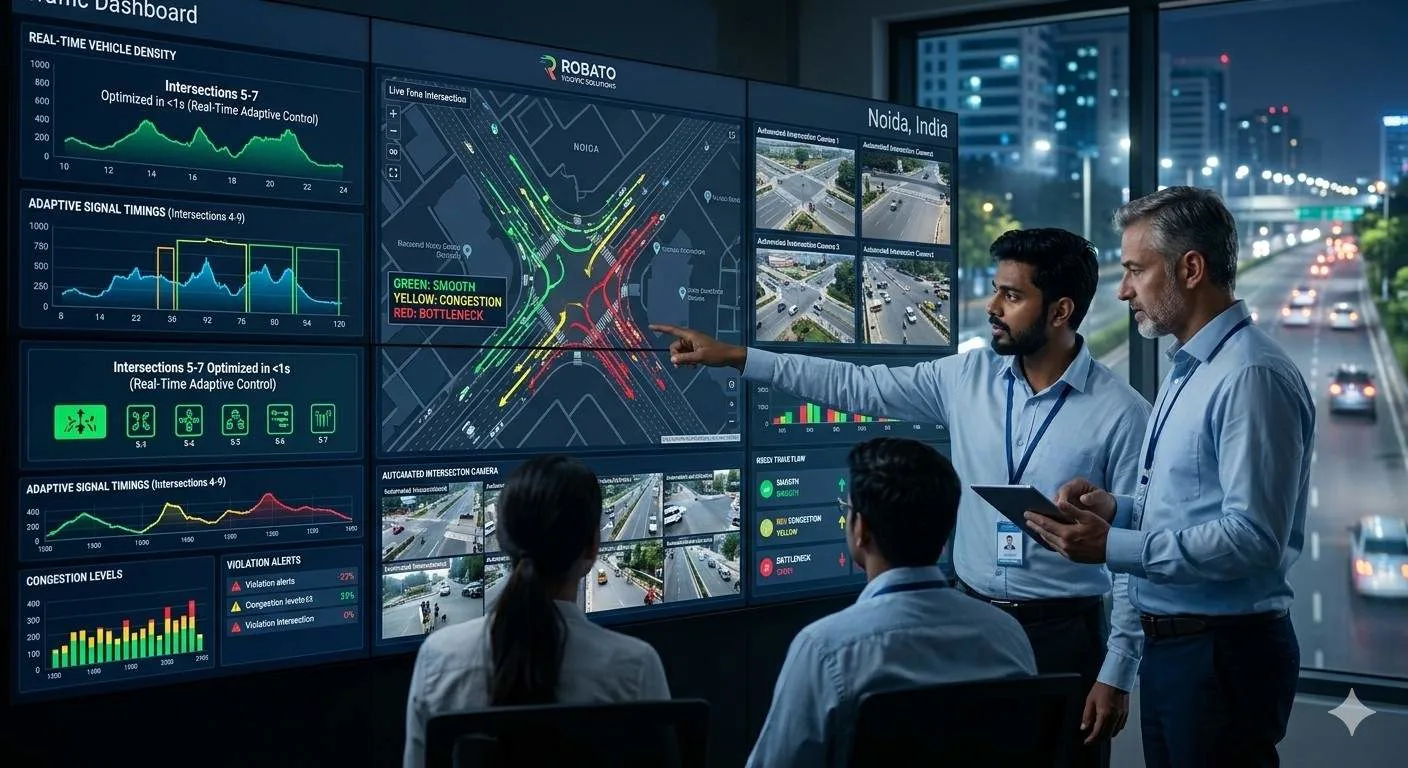
One of the key strengths of a Traffic Management System is real-time monitoring. Sensors, cameras, and connected devices continuously collect data from roads and intersections.
This data provides insights into vehicle density, traffic speed, and congestion levels. With this information, traffic authorities can take immediate action, such as adjusting signal timings or diverting traffic.
Real-time visibility helps prevent bottlenecks and ensures smoother movement throughout the day.
Intelligent Signal Control for Better Flow
Smart traffic systems use adaptive signal control to manage traffic lights based on actual conditions. Instead of fixed timers, signals change dynamically depending on traffic volume.
This reduces unnecessary waiting time at intersections and improves overall efficiency. In busy areas, it can significantly reduce travel time and fuel consumption.
Such intelligent control is a major step forward in building efficient urban infrastructure.
Reducing Congestion and Environmental Impact
Traffic congestion is not just an inconvenience. It also leads to increased fuel consumption and higher emissions.
Advanced traffic management solutions help reduce congestion by optimizing traffic flow and minimizing idle time. Similar smart solutions in parking systems have already shown how reducing search time can lower emissions and improve efficiency.
By applying the same principles to road traffic, cities can move towards cleaner and more sustainable environments.
Seamless Integration with Smart City Systems
Modern Traffic Management Systems are designed to work as part of a larger smart city ecosystem. They can integrate with parking systems, surveillance networks, and public transport solutions.
This connected approach allows cities to manage multiple aspects of urban mobility from a single platform. It also ensures better coordination between different departments, leading to more effective traffic control.
Automation That Reduces Human Dependency
Automation is a key feature of modern traffic systems. Tasks such as vehicle detection, signal control, and data analysis are handled automatically.
This reduces the need for manual intervention and minimizes human errors. Similar automation in industrial systems has proven to improve accuracy, speed, and reliability across operations.
With automated traffic management, authorities can focus more on planning and strategy rather than routine operations.
Enhanced Safety for Roads and Pedestrians
Safety is a top priority in traffic management. Smart systems help reduce accidents by monitoring traffic violations, controlling speed, and ensuring proper signal coordination.
Features like real-time alerts and surveillance integration allow quick response to emergencies. This not only improves road safety but also builds public confidence in urban infrastructure.
Data Driven Decisions for Future Planning
Traffic Management Systems generate valuable data that can be used for long-term planning. Authorities can analyze traffic patterns, identify high-risk areas, and plan infrastructure improvements accordingly.
This data-driven approach ensures that decisions are based on actual insights rather than assumptions, leading to better outcomes for cities and commuters.
The Road Ahead
As cities continue to grow, the need for efficient traffic management will only increase. Smart Traffic Management Systems offer a scalable and future-ready solution to handle this challenge.
By combining real-time monitoring, automation, and intelligent control, these systems are transforming how cities manage mobility. They not only improve daily commuting but also contribute to safer and more sustainable urban living.
Final Thoughts
A Traffic Management System is no longer just about controlling signals. It is about creating a connected, efficient, and intelligent traffic ecosystem.
For cities aiming to reduce congestion, improve safety, and enhance overall mobility, investing in smart traffic solutions is a step in the right direction.