Weighbridge Automation Solution for Steel Manufacturing Plants
Introduction
Steel manufacturing plants operate in a highly demanding environment where thousands of tonnes of raw materials and finished products are transported every day. Iron ore, coal, limestone, billets, slabs, coils, structural steel, and finished products continuously move through the facility, making accurate vehicle weighing and logistics management essential.
Traditional weighbridge operations that depend on manual paperwork, operator intervention, and disconnected software often create bottlenecks. Long vehicle queues, inaccurate weighment records, dispatch delays, and inventory mismatches can significantly impact production schedules and customer deliveries.
A Steel Plant Weighbridge Automation solution addresses these challenges by integrating weighbridge software with RFID technology, ANPR cameras, boom barriers, ERP systems, and centralized dashboards. The result is a faster, more secure, and highly efficient logistics process that improves operational visibility while reducing manual effort.
What is Steel Plant Weighbridge Automation?
Steel Plant Weighbridge Automation is an integrated system that automates the complete vehicle weighing and logistics workflow within a steel manufacturing facility.
The solution automatically identifies vehicles, records accurate weights, validates dispatch or receiving information, updates ERP systems, and controls gate access without manual intervention.
A modern steel plant weighbridge automation solution includes:
RFID Vehicle Identification
Boom Barrier Control
ERP & SAP Integration
Digital Weighment Slips
Live Dashboard & Reporting
By connecting these technologies, steel manufacturers can manage high vehicle volumes efficiently while maintaining complete operational control.
Challenges in Traditional Steel Plant Weighbridge Operations
Steel plants often process hundreds of heavy vehicles every day. Manual processes can create several operational challenges.
Long Vehicle Waiting Time
Manual verification and document checking increase truck turnaround time at entry and exit gates.
Inaccurate Weighment Records
Manual weight recording can lead to errors that affect inventory accuracy and customer billing.
Dispatch Delays
Slow weighment processes delay outbound shipments and disrupt delivery schedules.
Inventory Discrepancies
Delayed updates between weighbridge operations and ERP systems can result in stock mismatches.
Security Risks
Unauthorized vehicles or duplicate weighments can lead to material losses and operational risks.
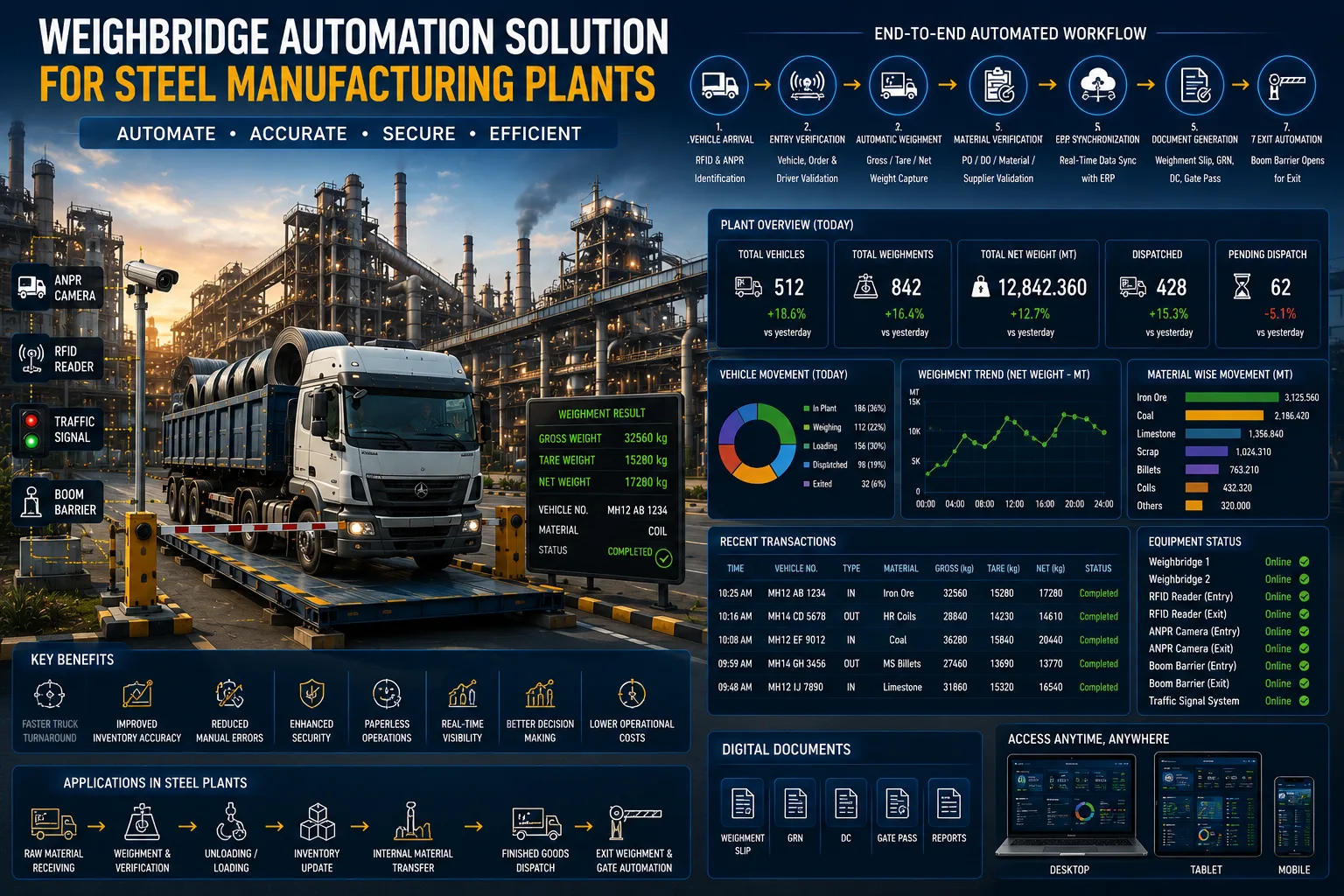
How Steel Plant Weighbridge Automation Works
Step 1: Vehicle Registration
Supplier and transporter vehicles are registered with RFID tags and linked to the ERP system.
Step 2: Automated Entry Verification
When a vehicle arrives, RFID readers identify the truck while ANPR cameras verify the registration number.
Only authorized vehicles are permitted to enter.
Step 3: Automatic Weighment
The truck is weighed automatically, and weight information is captured directly by the weighbridge software.
Step 4: Material Verification
The system validates:
Purchase Orders
Dispatch Orders
Material Type
Vehicle Details
Customer or Supplier Information
Step 5: ERP Synchronization
All weighment transactions are instantly updated in ERP, inventory, finance, and production systems.
Step 6: Dispatch or Material Receipt
Depending on the workflow, the vehicle proceeds for unloading or loading.
Step 7: Exit Weighment & Gate Automation
The final weighment is completed, digital documents are generated, and the boom barrier opens automatically after successful verification.
Key Features of Steel Plant Weighbridge Automation
RFID-Based Vehicle Identification
Automatically identifies trucks entering and leaving the facility.
ANPR Integration
Provides additional verification by matching vehicle registration numbers.
Automatic Weight Capture
Eliminates manual weight entry and improves accuracy.
ERP Integration
Synchronizes weighment data with inventory, procurement, finance, and production modules.
Digital Documentation
Automatically generates:
Weighment Slips
Delivery Challans
Goods Receipt Notes
Dispatch Documents
Gate Passes
Real-Time Dashboard
Monitor all vehicle movements and weighbridge activities from one centralized platform.
Exception Management
Receive alerts for:
Weight mismatches
Unauthorized vehicles
Duplicate weighments
Equipment faults
Delayed dispatches
Benefits of Steel Plant Weighbridge Automation
Faster Truck Processing
Reduce waiting time by automating identification and weighment.
Improved Inventory Accuracy
Real-time ERP synchronization ensures accurate stock updates.
Better Dispatch Management
Accelerate outbound shipments while reducing logistics delays.
Reduced Human Errors
Automatic data capture eliminates manual entry mistakes.
Enhanced Security
RFID and ANPR prevent unauthorized vehicle access and fraudulent activities.
Paperless Operations
Digital documents reduce administrative workload and improve audit readiness.
Increased Productivity
Automation allows staff to focus on higher-value operational tasks.
Better Decision-Making
Live dashboards provide management with real-time operational insights.
Applications in Steel Manufacturing
Raw Material Receiving
Automate inbound weighing of iron ore, coal, coke, limestone, and scrap metal.
Finished Goods Dispatch
Manage dispatch of coils, billets, bars, sheets, and structural steel efficiently.
Internal Material Transfer
Track movement of materials between production units.
Contractor Vehicle Management
Monitor contractor and transporter vehicles entering the plant.
Fleet Monitoring
Track vehicle movement across loading bays, warehouses, and dispatch zones.
Best Practices for Successful Implementation
To maximize automation benefits:
Register all transport vehicles with RFID tags.
Integrate weighbridge software with ERP systems.
Install ANPR cameras for dual verification.
Enable automatic boom barrier control.
Use centralized dashboards for operational monitoring.
Configure automatic alerts for exceptions.
Conduct regular calibration and maintenance of weighbridge equipment.
Future Trends in Steel Plant Weighbridge Automation
Artificial Intelligence
AI will identify operational bottlenecks and recommend workflow improvements.
Internet of Things (IoT)
Connected sensors will continuously monitor weighbridge health and equipment performance.
Predictive Analytics
Historical weighment data will help forecast vehicle traffic and optimize dispatch planning.
Cloud-Based Operations
Corporate teams will monitor multiple steel plants from a centralized cloud dashboard.
Smart Factory Integration
Weighbridge automation will become a core component of Industry 4.0 smart manufacturing ecosystems.
Why Steel Plants Should Invest in Weighbridge Automation
Steel manufacturing requires speed, precision, and complete operational visibility. An integrated weighbridge automation system enables organizations to streamline logistics while maintaining accurate inventory and improving dispatch performance.
Organizations implementing weighbridge automation often achieve:
Reduced truck turnaround time
Improved inventory accuracy
Faster dispatch operations
Enhanced plant security
Better compliance and audit readiness
Lower operational costs
Increased customer satisfaction
Conclusion
As steel manufacturing facilities continue to modernize, automating weighbridge operations has become essential for improving logistics efficiency and operational control. A Steel Plant Weighbridge Automation solution combines RFID identification, ANPR verification, automated weighing, ERP integration, and real-time dashboards into a single intelligent platform.
By eliminating manual processes and providing complete visibility into vehicle movement and material flow, steel manufacturers can improve productivity, reduce operational costs, and strengthen supply chain performance.
Frequently Asked Questions (FAQs)
What is Steel Plant Weighbridge Automation?
Steel Plant Weighbridge Automation is a solution that automates vehicle weighing, identification, dispatch, and ERP integration within steel manufacturing facilities.
How does RFID improve weighbridge operations in steel plants?
RFID automatically identifies vehicles, reducing manual verification and speeding up logistics operations.
Can the system integrate with SAP or other ERP software?
Yes. Modern weighbridge automation solutions integrate with SAP, Oracle, Microsoft Dynamics, and other ERP platforms.
Which steel plant operations benefit from weighbridge automation?
Raw material receiving, finished goods dispatch, internal logistics, inventory management, and fleet monitoring all benefit from automation.
What are the major advantages of weighbridge automation in steel plants?
Benefits include faster truck processing, improved inventory accuracy, enhanced security, reduced paperwork, better reporting, and improved operational efficiency.