RFID Based Inward Material Automation with Weighbridge Integration
Introduction
Efficient raw material receiving is one of the most important processes in any manufacturing facility. Every day, trucks carrying raw materials arrive at factories, warehouses, and production plants. Traditional inward material processes often rely on manual verification, handwritten records, and disconnected systems, resulting in delays, data entry errors, and operational inefficiencies.
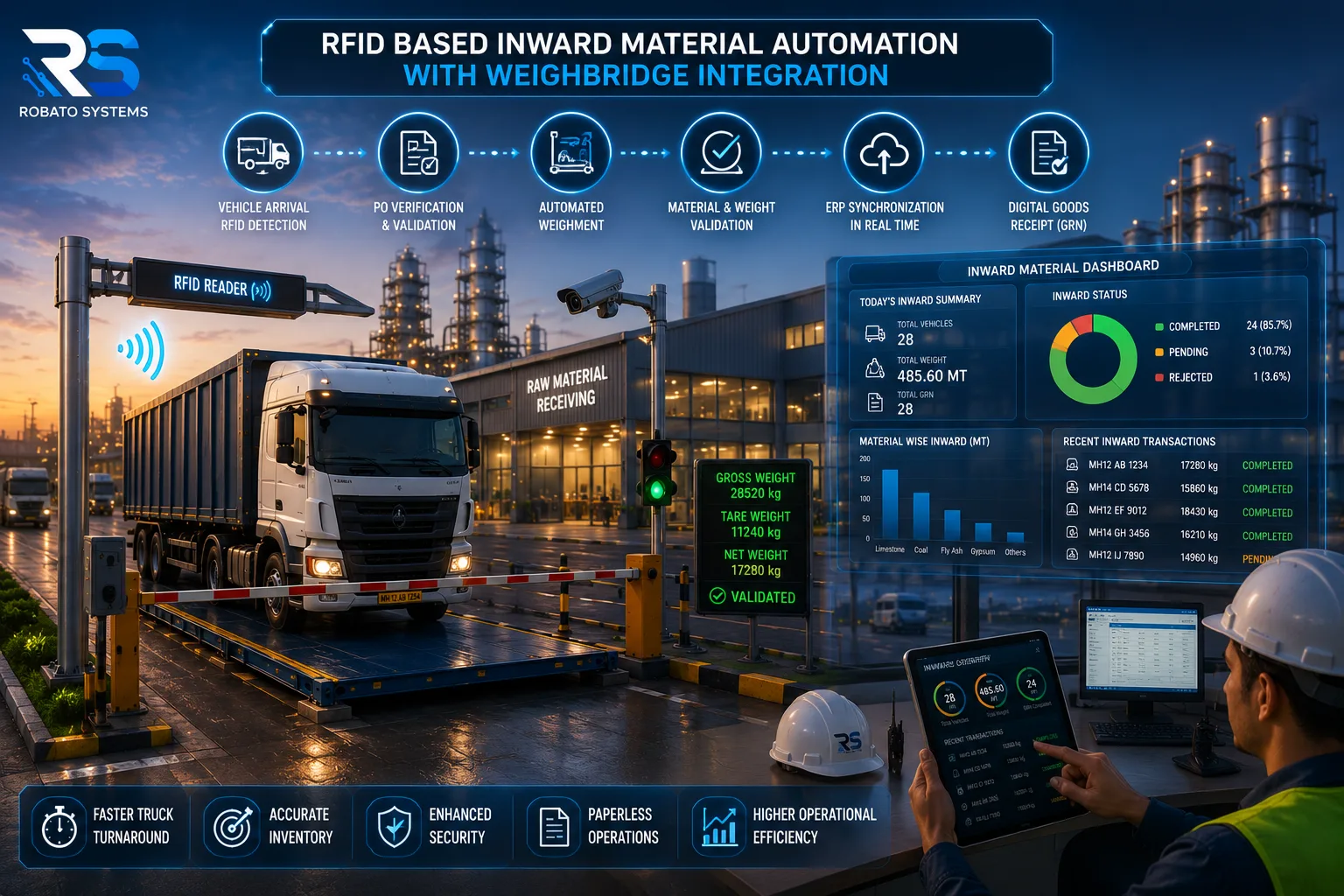
RFID Inward Material Automation combined with Weighbridge Integration modernizes this process by automatically identifying incoming vehicles, recording weighment data, validating purchase orders, and updating ERP systems in real time. This automation minimizes manual intervention, accelerates truck processing, and improves inventory accuracy.
Whether in cement manufacturing, steel production, mining, chemical processing, or food manufacturing, RFID-enabled inward material automation helps businesses create faster, more secure, and more transparent receiving operations.
What is RFID Inward Material Automation?
RFID Inward Material Automation is an intelligent solution that automates the complete raw material receiving process using RFID technology, weighbridge automation, and enterprise software integration.
When a supplier's vehicle arrives, the RFID tag attached to the truck is automatically detected. The system verifies the vehicle, captures the weight from the weighbridge, validates purchase order information, and records the transaction without manual data entry.
A complete inward automation system typically includes:
RFID Vehicle Identification
Boom Barrier Control
ERP & SAP Integration
Purchase Order Verification
Digital Goods Receipt Generation
Real-Time Monitoring Dashboard
Challenges in Manual Inward Material Processing
Many industries still depend on paper-based receiving processes that create operational bottlenecks.
Long Vehicle Waiting Time
Manual verification and paperwork increase truck turnaround time at factory gates.
Data Entry Errors
Incorrect vehicle details, purchase order numbers, or material quantities can lead to inventory discrepancies.
Inventory Mismatch
Delayed updates in inventory systems make stock planning less accurate.
Unauthorized Material Entry
Without automated verification, unauthorized vehicles may enter the facility.
High Administrative Workload
Manual documentation consumes valuable time for stores and logistics personnel.
How RFID Inward Material Automation Works
Step 1: Purchase Order Creation
The procurement team creates a purchase order in the ERP system.
Step 2: Vehicle Arrival
The supplier's vehicle arrives at the facility with an RFID tag assigned to the shipment or vehicle.
Step 3: RFID Verification
RFID readers automatically identify the vehicle and verify it against the purchase order.
Step 4: Automated Weighment
The truck is weighed using an integrated weighbridge, and the weight is recorded automatically.
Step 5: Material Validation
The system verifies:
Supplier Details
Purchase Order
Material Type
Vehicle Information
Weight Data
Step 6: ERP Synchronization
Validated information is automatically updated in the ERP, inventory, and procurement systems.
Step 7: Digital Goods Receipt
The software generates digital weighment slips, goods receipt notes (GRNs), and transaction records.
Key Features of RFID Inward Material Automation
Automatic Vehicle Identification
RFID eliminates manual vehicle verification and speeds up entry.
Integrated Weighbridge Automation
Weight data is captured directly from the weighbridge without manual intervention.
Purchase Order Validation
Only approved purchase orders are processed, reducing errors.
ERP Integration
Automatically updates inventory, procurement, and finance modules.
Digital Documentation
Generate electronic weighment slips and goods receipt records.
Real-Time Dashboard
Monitor inbound vehicle status and receiving activities from a centralized dashboard.
Exception Alerts
Receive notifications for unauthorized vehicles, weight mismatches, or invalid purchase orders.
Benefits of RFID Inward Material Automation
Faster Material Receiving
Automated verification significantly reduces truck waiting time.
Improved Inventory Accuracy
Real-time updates ensure accurate inventory records.
Reduced Human Errors
Automatic data capture eliminates manual entry mistakes.
Better Supplier Management
Track supplier deliveries and receiving performance.
Enhanced Security
Only authorized vehicles are allowed to enter the premises.
Reduced Paperwork
Digital documentation simplifies record management and audits.
Higher Operational Efficiency
Automated workflows improve receiving productivity and reduce labor requirements.
Industries That Benefit from RFID Inward Material Automation
Manufacturing Plants
Automate the receipt of raw materials and production supplies.
Cement Industry
Manage inbound cement raw materials efficiently with automated verification.
Steel Manufacturing
Track incoming scrap, billets, and other raw materials accurately.
Mining Industry
Automate mineral receiving and transportation records.
Chemical Plants
Improve compliance and traceability for hazardous material deliveries.
Food Processing
Ensure accurate receipt of agricultural products and packaging materials.
Warehousing & Distribution
Accelerate inbound logistics and inventory updates.
Best Practices for Successful Implementation
To maximize the benefits of RFID inward material automation:
Register all supplier vehicles with RFID tags.
Integrate weighbridge software with ERP and inventory systems.
Enable ANPR for additional vehicle verification.
Configure automatic purchase order validation.
Implement digital documentation workflows.
Monitor receiving KPIs through dashboards.
Conduct regular system audits to ensure data accuracy.
Future Trends in Inward Material Automation
Artificial Intelligence
AI will predict delivery schedules and identify receiving bottlenecks.
Internet of Things (IoT)
Connected sensors will monitor material movement throughout the receiving process.
Cloud-Based Receiving Platforms
Businesses will monitor inbound logistics across multiple facilities from a single dashboard.
Predictive Analytics
Historical receiving data will help optimize procurement planning and warehouse capacity.
Paperless Operations
Digital workflows will completely replace manual receiving documentation.
Conclusion
Modern manufacturing depends on efficient and accurate material receiving. RFID Inward Material Automation integrated with weighbridge systems simplifies the entire inbound process by automating vehicle identification, weighment, purchase order validation, and ERP updates.
The result is faster truck processing, accurate inventory records, improved security, and better operational visibility. As organizations continue their digital transformation journey, RFID-enabled inward material automation has become an essential investment for improving supply chain efficiency and reducing manual effort.
Frequently Asked Questions (FAQs)
What is RFID Inward Material Automation?
It is a solution that automates raw material receiving using RFID technology, weighbridge integration, and ERP connectivity.
How does RFID improve the inward material process?
RFID automatically identifies vehicles, reducing manual verification and accelerating material receiving.
Can RFID inward automation integrate with ERP software?
Yes. It integrates with ERP systems such as SAP, Oracle, Microsoft Dynamics, and other enterprise platforms.
Which industries use RFID inward material automation?
Manufacturing, cement, mining, steel, food processing, warehousing, and chemical industries commonly use this solution.
What are the main benefits of RFID inward automation?
Key benefits include faster receiving, accurate inventory updates, reduced paperwork, enhanced security, and improved operational efficiency.