
Logistics Weighbridge Automation System: The Complete Guide to Smarter Logistics Operations
In high-volume logistics environments, time, accuracy, and coordination are everything. Every delay at a weighbridge can disrupt delivery schedules, increase operational costs, and create bottlenecks across the supply chain. This is where a Logistics Weighbridge Automation System becomes essential. By automating vehicle identification, weight capture, and transaction processing, it transforms traditional weighbridge operations into a fast, accurate, and fully controlled system.
Why Logistics Operations Need Automation
Logistics hubs deal with a constant flow of trucks entering and exiting facilities. Manual weighbridge operations struggle to keep up with this volume. Operators often rely on manual data entry, which slows down processing and increases the risk of errors. Challenges such as long queues, mismatched shipment weights, and lack of visibility across multiple locations are common in traditional systems. A Logistics Weighbridge Automation System addresses these issues by introducing speed, accuracy, and real-time control into the process.
What Is a Logistics Weighbridge Automation System
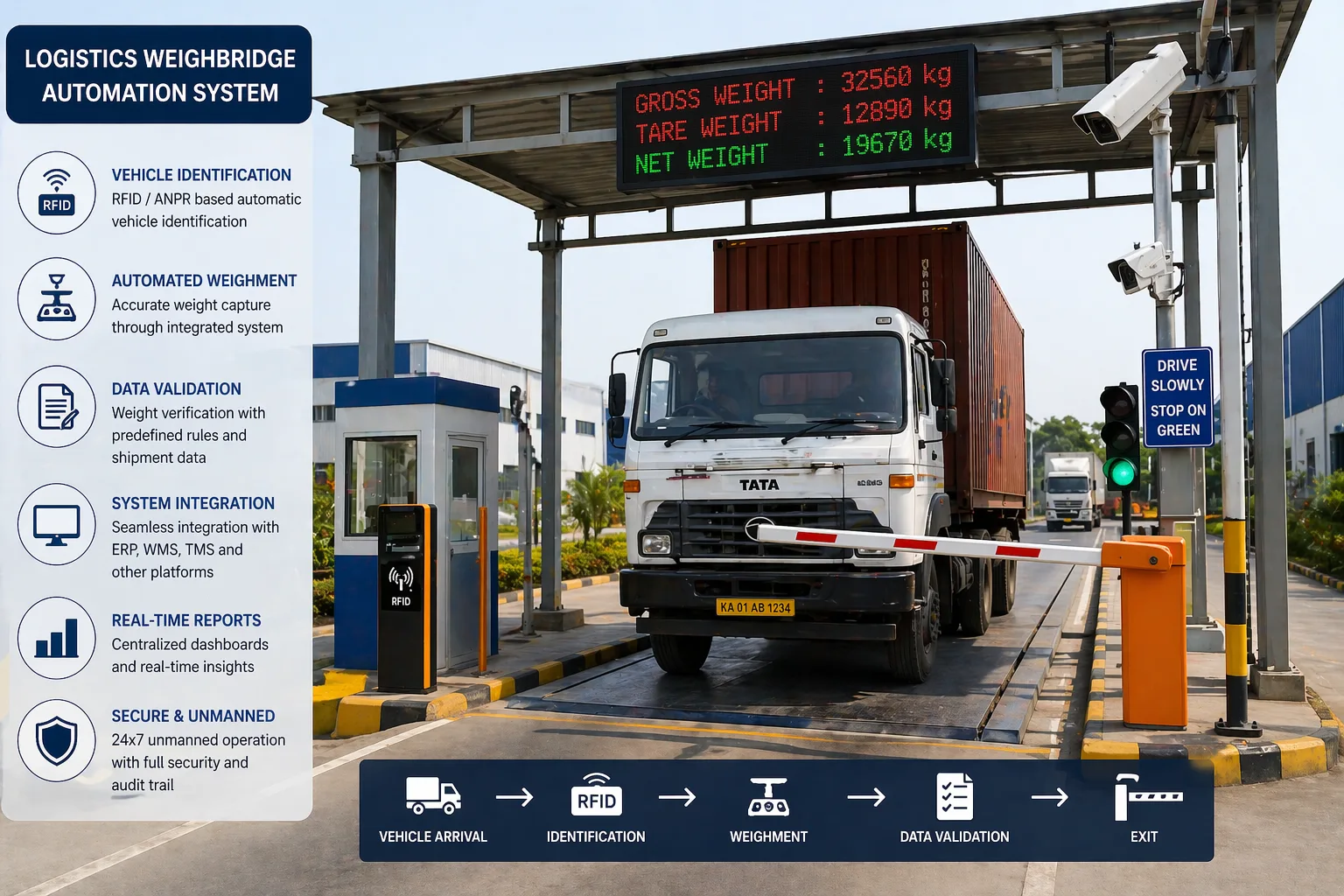
A Logistics Weighbridge Automation System is a digital solution that automates the entire weighment process. It identifies vehicles using technologies such as RFID or ANPR, captures gross and tare weight automatically, validates transactions against shipment data, and integrates with enterprise systems like ERP, WMS, and TMS. This creates a seamless and fully automated workflow from vehicle entry to exit.
How the System Works in Real Time
The system operates through a structured and automated process. When a vehicle arrives, it is identified instantly using RFID tags or ANPR cameras. The system verifies the vehicle against shipment or order data before allowing entry. Sensors ensure the vehicle is correctly positioned on the weighbridge. Once aligned, weight data is captured automatically from the weighbridge controller. The system then validates the weight against predefined rules and locks the transaction. Finally, the vehicle exits without any manual intervention. This entire process happens within seconds, ensuring smooth and uninterrupted movement.
Core Components That Drive the System
A Logistics Weighbridge Automation System combines multiple technologies working together. Key components include RFID readers, ANPR cameras, vehicle sensors, traffic lights, boom barriers, and LED displays for driver guidance. At the center is intelligent software that processes data, enforces rules, and provides real-time visibility. This integration ensures accuracy, speed, and complete control over operations.
Faster Turnaround for High-Volume Traffic
One of the most important benefits of a Logistics Weighbridge Automation System is reduced truck turnaround time. With automated identification and weighing, vehicles no longer need to wait for manual processing. This leads to faster entry and exit, reduced congestion, and improved overall efficiency in logistics operations.
Accuracy That Improves Billing and Compliance
In logistics, even small discrepancies in weight can lead to billing errors and financial losses. Automation ensures that weight data is captured directly from the weighbridge controller, eliminating manual entry errors. The system also validates weights against shipment data, ensuring accurate billing and compliance with operational standards.
Real-Time Visibility Across Operations
A Logistics Weighbridge Automation System provides centralized dashboards and reports. Operators can monitor vehicle movement, track transactions, and analyze performance across multiple locations in real time. This visibility helps in identifying bottlenecks, improving planning, and optimizing overall logistics operations
Seamless Integration With Enterprise Systems
Modern logistics operations rely on connected systems. The automation system integrates with ERP, WMS, and TMS platforms, ensuring that weighment data flows directly into business processes. This integration improves coordination between departments and enhances operational efficiency.
Reducing Dependency on Manual Operations
Manual weighbridge operations require constant supervision and multiple operators across shifts. A Logistics Weighbridge Automation System enables 24×7 unmanned operations, reducing manpower dependency while maintaining high accuracy and reliability. This not only lowers operational costs but also ensures consistency in performance.
Scalable and Future-Ready Solution
As logistics operations grow, the system can scale to handle increased traffic and multiple locations. It supports centralized monitoring, multi-warehouse integration, and cloud-based analytics, making it a future-ready solution for modern supply chains.
Conclusion
A Logistics Weighbridge Automation System is no longer just an upgrade. It is a necessity for modern logistics operations. By automating identification, weighing, and validation, it eliminates delays, improves accuracy, and enhances overall efficiency. For logistics hubs, warehouses, and distribution centers handling high vehicle volumes, this system delivers measurable improvements in speed, control, and profitability.