Integrated Traffic Management System: The Complete Guide for Smarter Roads and Facilities
Managing traffic effectively has never been more complex or more critical. Whether it is a busy urban intersection, a sprawling industrial campus, or a high-volume airport terminal, the movement of vehicles needs to be coordinated intelligently across every touchpoint simultaneously. That is precisely what an integrated traffic management system delivers. It brings together sensors, cameras, variable message signs, access control hardware, and centralized software into a single, connected platform that gives operators complete visibility and control over every aspect of vehicle movement in real time. This guide covers everything you need to know about it.
What Integration Actually Means in Traffic Management
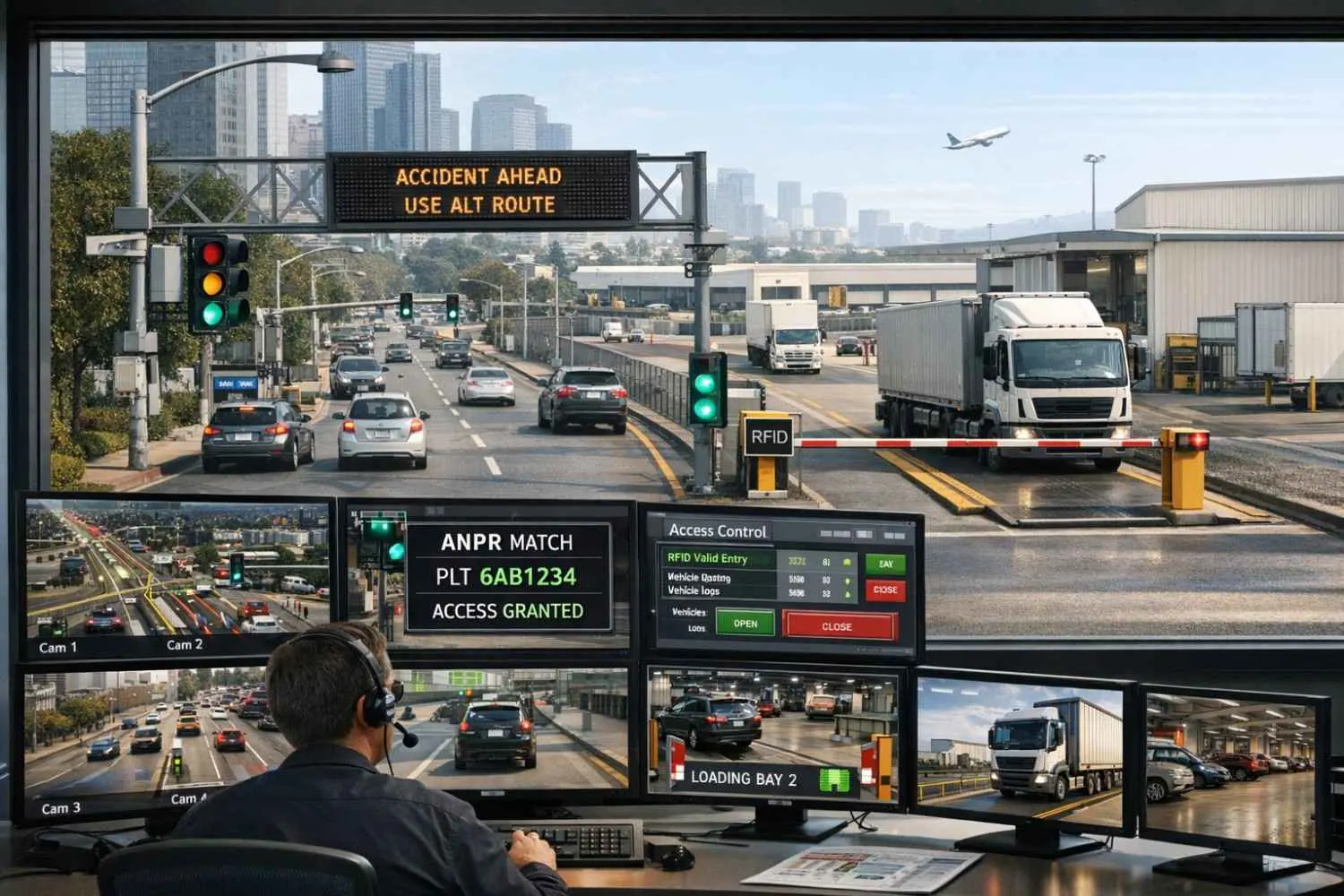
The word "integrated" is used frequently in the technology world, but in traffic management, it has a very specific and important meaning. A truly integrated traffic management system does not just connect a few cameras to a monitor. It unifies every component of the traffic environment, including vehicle detection sensors, RFID readers, ANPR cameras, boom barriers, LED variable message signs, traffic signal controllers, weighbridges, and central management software, into a single platform where all data is shared, all actions are coordinated, and all events are logged in one place.
This integration is what separates a collection of individual traffic tools from a genuinely intelligent system. When a vehicle enters a facility and triggers an RFID reader at the gate, the integrated system simultaneously logs the entry, updates the occupancy count, checks the vehicle against an authorized list, lifts the barrier if approved, and updates the relevant LED signage to reflect the new availability data. All of this happens automatically, in real time, without any manual input from an operator.
The Core Components That Work Together
An integrated traffic management system from Robato Systems brings together several core hardware and software components, each performing a specific function while contributing to the overall intelligence of the connected platform.
Vehicle detection sensors placed at entry points, intersections, and key zones within a facility monitor vehicle presence and count continuously. ANPR cameras read license plates automatically and match them against a database of registered and authorized vehicles. RFID systems identify tagged vehicles instantly as they approach a controlled access point. Boom barriers regulate the physical movement of vehicles based on signals from the access control layer.
LED variable message signs mounted at roadside locations and internal facility decision points display live information to drivers including available spaces, routing instructions, speed limits, safety warnings, and emergency alerts. The central software platform ties all of these components together, processing incoming data, triggering appropriate responses, and presenting a unified operational picture to facility managers through a cloud-based dashboard accessible from any device.
Why Private Facilities Need It as Much as Public Roads
Most people associate traffic management with city highways and urban intersections. But some of the most demanding traffic management challenges exist within private facilities. Airports, hospitals, manufacturing plants, logistics depots, and large commercial complexes all generate significant volumes of vehicle traffic every day, often with a higher degree of safety risk and operational consequence than a public road.
At an airport, thousands of vehicles move through departure zones, parking terminals, and cargo areas simultaneously. A poorly managed vehicle flow creates congestion that delays passengers and disrupts ground operations. At a logistics hub, heavy vehicles moving between loading bays, weighbridges, and exit gates need to be directed precisely to avoid collisions, delays, and compliance failures. An integrated traffic management system handles all of these challenges within a single platform, making the entire facility safer, faster, and more efficiently managed.
Real-Time Visibility That Drives Faster Decisions
The most immediate operational benefit of an integrated traffic management system is the speed at which operators can identify and respond to problems. When every component of the traffic environment feeds data into a central platform simultaneously, any anomaly, whether it is an unauthorized vehicle attempting access, a congestion buildup at a junction, or a barrier malfunction, is visible to the operator the moment it occurs.
Automated alerts send instant notifications to the relevant personnel by text or email, ensuring that the right person receives the right information without any manual monitoring required. This compression of response time is what transforms a reactive traffic operation into a proactive one, where problems are addressed before they escalate into incidents.
Scalable, Flexible, and Built for Long-Term Use
A well-designed integrated traffic management system is not a fixed installation. It is a scalable platform that grows with the facility it serves. New entry points, additional parking zones, expanded road networks, and new hardware components can all be added to the system as the facility evolves, without replacing the core infrastructure that is already in place.
Robato Systems designs its integrated traffic management solutions to be modular and compatible with existing facility infrastructure, which means the transition from a fragmented set of tools to a fully integrated platform is smoother and more cost-effective than most facility operators expect.