A weighbridge is more than a platform used to measure vehicle weight. In manufacturing, mining, logistics, cement, steel, agriculture, and other industries, it can be an important control point for tracking the movement of raw materials and finished goods.
When weighbridge operations depend heavily on manual entries, paperwork, and operator coordination, vehicle processing can become slower and more difficult to monitor.
Digital weighbridge automation provides a way to streamline these processes by connecting vehicle identification, weighing, access control, transaction management, and reporting into one workflow.
Common Problems in Manual Weighbridge Operations
Many plants experience similar operational challenges, including:
Manual vehicle identification
Repeated data entry
Paper-based weighment records
Long truck queues
Incorrect vehicle information
Delayed dispatch processing
Difficulty tracking transactions
Limited real-time visibility
Time-consuming report preparation
These issues can become more noticeable when vehicle volumes increase.
1. Digitize Weight Capture
The first step toward improving weighbridge operations is automatically capturing weight data from the weighing indicator.
Instead of operators manually entering readings, the system can record:
Gross weight
Tare weight
Net weight
Vehicle number
Date and time
Material
Transaction details
Direct digital capture can reduce unnecessary manual entry and create a consistent transaction record.
2. Automate Vehicle Identification
Vehicle identification is another area where automation can reduce operator workload.
Depending on the plant's requirements, technologies such as RFID and ANPR can be used.
RFID can identify registered vehicles automatically, while ANPR cameras can capture vehicle registration numbers.
These technologies can also be combined to provide additional verification.
3. Control Vehicle Movement
A weighbridge can become more efficient when vehicle movement is controlled automatically.
Automation can connect:
RFID readers
Vehicle sensors
Traffic lights
Boom barriers
Weighbridge software
For example:
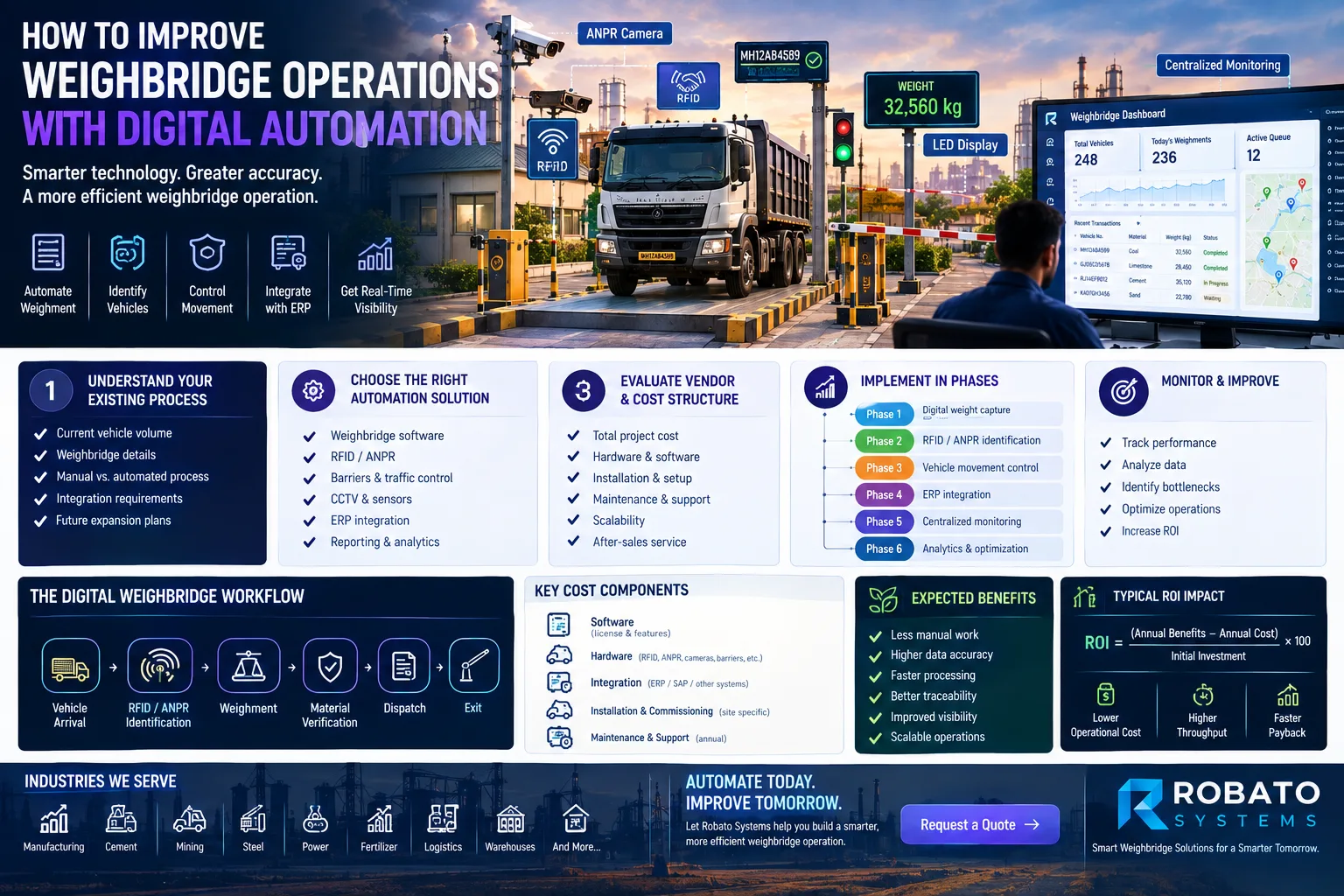
Vehicle Arrives → Vehicle Identified → Entry Authorized → Weighment → Transaction Completed → Exit Authorized
A structured workflow can help reduce unnecessary vehicle movement and improve process control.
4. Reduce Truck Waiting Time
Long queues can affect both logistics efficiency and plant operations.
A digital system can help track vehicle status and organize movement through the weighbridge area.
Depending on the implementation, features such as queue management, vehicle call-forward systems, RFID identification, and automated entry controls can help create a more organized process.
The actual reduction in waiting time will depend on the plant layout, traffic volume, and existing workflow.
5. Connect the Weighbridge with ERP
Manual transfer of weighbridge information into an ERP system can create duplicate work.
ERP integration can allow relevant transaction information to move between systems automatically.
For example:
ERP Order → Vehicle Arrival → Weighment → Net Weight → Transaction Confirmation → Dispatch
The exact workflow depends on the organization's business process and ERP configuration.
6. Create Digital Transaction Records
A centralized digital database makes it easier to search and review weighbridge transactions.
Users can potentially search records using information such as:
Vehicle number
Material
Supplier
Customer
Transaction date
Weighbridge
Weighment number
This can be useful when investigating historical transactions or preparing operational reports.
7. Improve Reporting
Automated weighbridge systems can generate reports without requiring operators to manually consolidate data.
Useful reports may include:
Daily weighment reports
Vehicle-wise reports
Material-wise reports
Supplier-wise reports
Customer-wise reports
Gross and tare reports
Dispatch reports
Exception reports
Management dashboards can provide a more convenient way to monitor operations.
8. Add CCTV and ANPR for Better Visibility
CCTV and ANPR can add another layer of visibility to weighbridge operations.
Cameras can help record vehicle movement, while ANPR can associate captured vehicle numbers with transactions.
When integrated with the weighbridge system, these technologies can provide additional information for reviewing unusual or disputed transactions.
9. Monitor Multiple Weighbridges
Large manufacturing facilities may operate multiple weighbridges.
Managing each weighbridge separately can make centralized monitoring more difficult.
A centralized platform can provide visibility across multiple weighing points and, where required, multiple plants.
Management can use consolidated information to understand overall vehicle and material movement.
10. Use Data for Process Improvement
Once weighbridge transactions are stored digitally, the data can be used to identify operational patterns.
For example, management can analyze:
Vehicle processing time
Peak traffic periods
Daily vehicle volumes
Weighbridge utilization
Material movement
Dispatch trends
Transaction exceptions
This helps move the weighbridge from a basic transaction-recording system toward a source of operational information.
Benefits of Digital Weighbridge Automation
A properly designed automation system can help organizations achieve:
Less Manual Work
Automated identification and data capture can reduce repetitive operator activities.
Better Data Accuracy
Direct communication with weighing equipment can reduce manual transcription errors.
Faster Processing
A streamlined workflow can reduce unnecessary steps during vehicle processing.
Better Traceability
Digital records make transactions easier to search, review, and audit.
Improved Visibility
Dashboards and reports can give management better insight into weighbridge activity.
Scalable Operations
A modular system can allow additional weighbridges, devices, users, or integrations to be added as requirements grow.
What Should You Automate First?
Not every plant needs a complete automation system immediately.
A practical approach is to prioritize the biggest operational bottlenecks.
For example:
Step 1: Digital weight capture
Step 2: RFID or ANPR vehicle identification
Step 3: Automated barriers and traffic control
Step 4: ERP integration
Step 5: Centralized monitoring
Step 6: Analytics and optimization
This phased approach can make implementation easier while allowing the system to expand over time.
How Robato Systems Can Help
Robato Systems can help industrial organizations improve weighbridge operations through an integrated automation approach.
Depending on the plant's requirements, the solution can include:
Automated weighment
RFID vehicle identification
ANPR
Vehicle movement control
CCTV integration
ERP integration
Dispatch automation
Centralized dashboards
Digital reporting
Multi-weighbridge management
The exact system architecture can be planned around the existing weighbridge, plant layout, vehicle workflow, and business requirements.
Final Thoughts
Improving weighbridge operations is not only about installing new hardware. The biggest gains can come from creating a connected and structured workflow.
By digitizing weight capture, automating vehicle identification, controlling vehicle movement, integrating business systems, and using operational data, plants can create a more efficient and traceable weighbridge process.
The right automation strategy should be based on the plant's actual vehicle volume, existing infrastructure, operational challenges, and future requirements.
Request a Proposal
Want to improve your plant's weighbridge operations? Request a proposal from Robato Systems to discuss your existing process and identify suitable automation, RFID, ERP, and monitoring solutions.
FAQs
How can digital automation improve weighbridge operations?
It can reduce manual data entry, automate vehicle identification, improve transaction traceability, streamline vehicle movement, and provide better reporting.
Can RFID be used with an existing weighbridge?
Depending on the weighing equipment and system architecture, RFID can often be integrated with an existing weighbridge automation setup.
Does automation reduce truck waiting time?
Automation can help streamline vehicle identification and movement, but the actual improvement depends on factors such as traffic volume, plant layout, process design, and implementation.
Can weighbridge software integrate with ERP?
Yes, ERP integration can connect weighbridge transactions with relevant business processes such as purchasing, inventory, sales, and dispatch, depending on the ERP system and integration requirements.
What is the first step toward weighbridge automation?
The first step is usually to document the existing vehicle and weighing workflow, identify bottlenecks, and determine which processes should be automated first.