
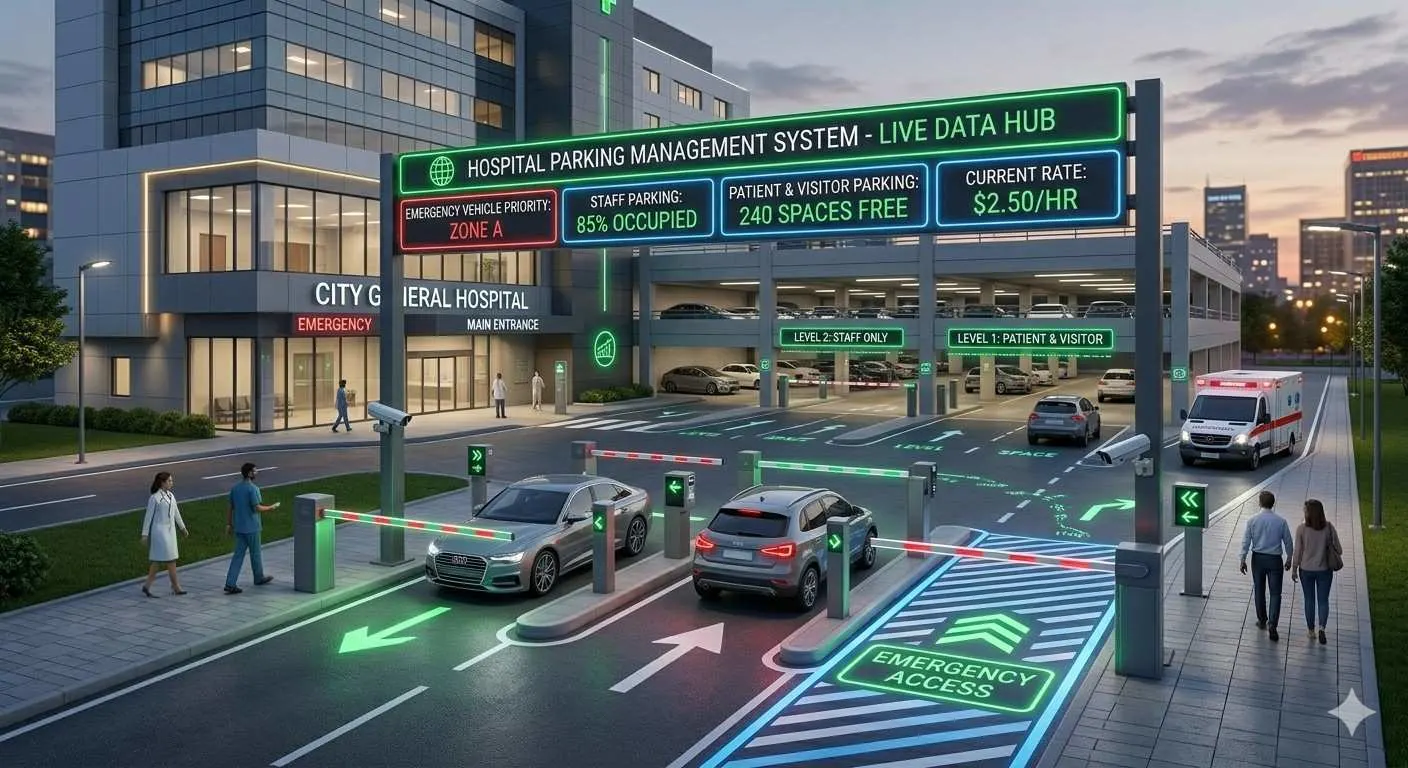
Hospital Parking Management System: Smarter Access for Better Care
In today’s fast-paced healthcare environment, efficiency begins even before a patient enters the building. A Hospital Parking Management System plays a critical role in ensuring smooth access, reducing delays, and improving the overall experience for patients, staff, and visitors. Hospitals are complex ecosystems with constant movement, and managing parking manually often leads to congestion, confusion, and wasted time. Modern smart parking solutions eliminate these challenges by introducing automation, real-time data, and intelligent control.
The Parking Problem Hospitals Can’t Ignore
Hospitals face unique parking challenges. Peak-hour congestion, emergency vehicle priority, and the need to accommodate staff shifts make parking management far more complex than in other sectors.
Without a structured system, parking spaces are often underutilized in some areas and overcrowded in others. This imbalance leads to frustration for visitors and delays in critical situations. Smart parking systems solve this by dynamically allocating space and improving overall flow.
Real-Time Guidance Makes a Big Difference
One of the most valuable features of a Hospital Parking Management System is real-time visibility. Using sensors and LED guidance displays, drivers can instantly see where parking spaces are available.
This eliminates the need to circle parking areas searching for a spot. It reduces congestion, saves time, and lowers fuel consumption. The system continuously updates availability, ensuring drivers always have accurate information.
Smart Zoning for Better Organization
Hospitals serve multiple types of users at the same time. Patients, visitors, doctors, and staff all have different parking needs.
A smart parking system divides spaces into clearly defined zones. Patients can be allocated parking based on appointments, staff parking can be managed through access credentials, and visitors can be guided dynamically based on availability. This structured approach ensures efficient use of every parking space.
Seamless Entry with Automation
Automation is at the core of modern Hospital Parking Management Systems. Technologies like RFID, ANPR (Automatic Number Plate Recognition), and smart barriers enable seamless entry and exit.
Vehicles can move in and out without stopping for manual verification. This not only speeds up traffic flow but also enhances security by allowing only authorized vehicles into restricted zones.
Priority Access for Emergency Vehicles
In a hospital, time is critical. A well-designed parking system ensures that emergency vehicles always get immediate access.
With automated gates and priority lane management, ambulances and emergency responders can enter without delay. The system can identify these vehicles instantly and clear pathways in real time, ensuring no obstruction during emergencies.
Enhanced Safety and Security
Parking areas in hospitals operate round the clock, making safety a top priority. Smart systems integrate CCTV monitoring, access control, and real-time tracking to ensure a secure environment.
Features like well-lit zones, emergency call points, and controlled access reduce risks and provide peace of mind to patients and visitors. Security teams also benefit from centralized monitoring and instant alerts.
Data That Drives Better Decisions
A Hospital Parking Management System does more than manage vehicles. It generates valuable data that helps hospitals improve operations.
Administrators can analyze peak hours, occupancy rates, and user behavior to make informed decisions. This data can be used to optimize layouts, plan expansions, and enhance efficiency across the facility.
Reducing Costs and Environmental Impact
Efficient parking management reduces unnecessary vehicle movement inside hospital premises. This lowers fuel consumption and minimizes emissions.
Automation also reduces the need for manual staff, cutting operational costs. Over time, the system delivers both financial and environmental benefits while improving user experience.
Integration with Hospital Ecosystem
Modern systems are designed to integrate seamlessly with hospital infrastructure. They can connect with appointment systems, billing platforms, and access control systems.
This integration creates a smooth and connected experience where parking becomes part of the overall healthcare journey rather than a separate process.
Conclusion
A Hospital Parking Management System is no longer a luxury. It is a necessity for modern healthcare facilities.
By combining automation, real-time data, and intelligent design, these systems transform parking into a seamless, efficient, and stress-free experience. For patients, it means quicker access to care. For hospitals, it means better operations and improved service quality. Investing in smart parking is not just about managing vehicles. It is about enhancing the entire healthcare experience from the very first moment.